
If there is one reason we grow our own garden, it’s to make a year’s worth of pesto every summer. Pesto can be very pricey to purchase, but is not difficult to make.
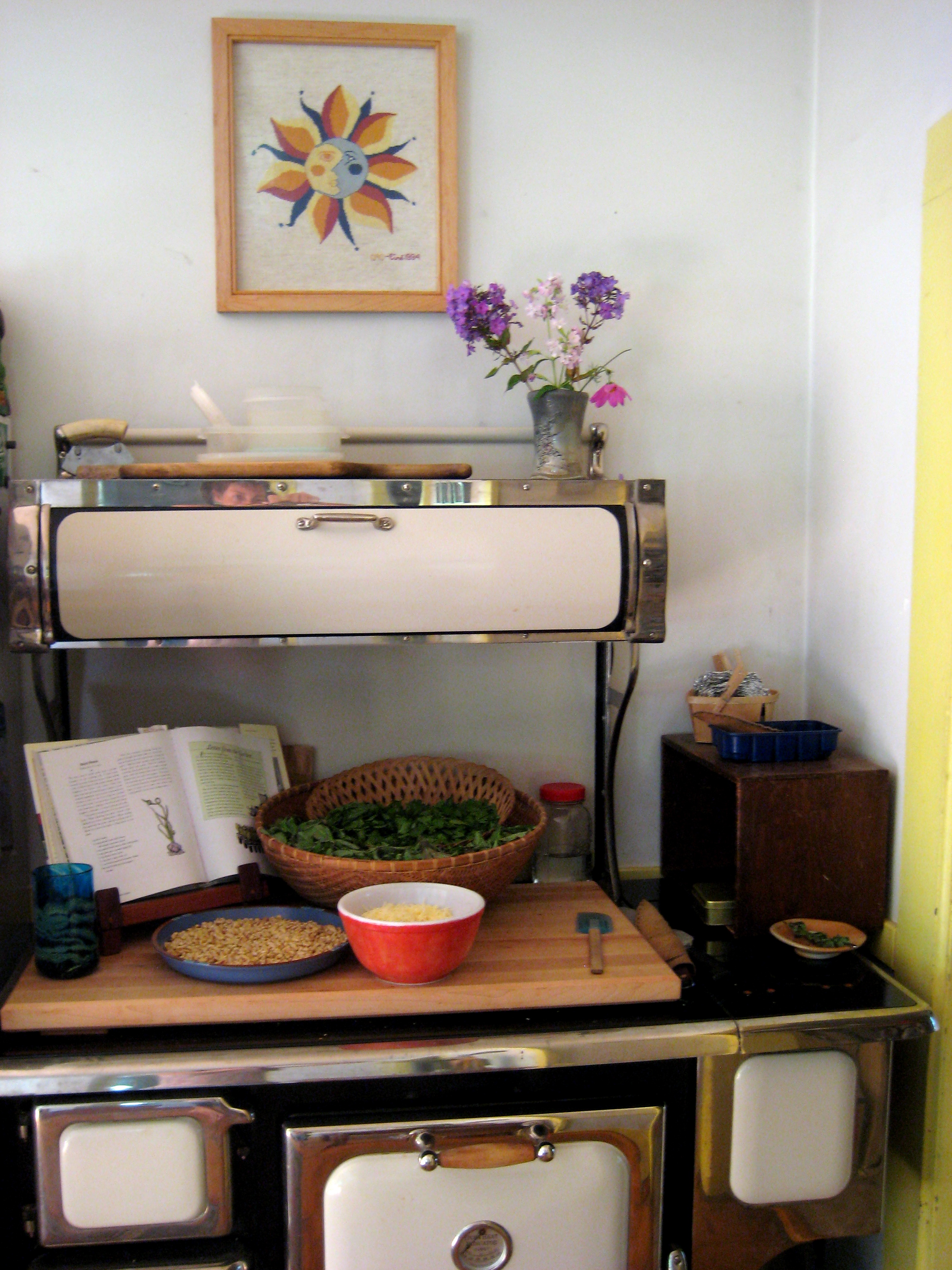
Every August, I make & freeze a year's worth of pesto.
I grow basil from seed, but you could also visit your local farmer’s market in season & get plenty of fresh basil for a fraction of what you’d pay for it in winter months.
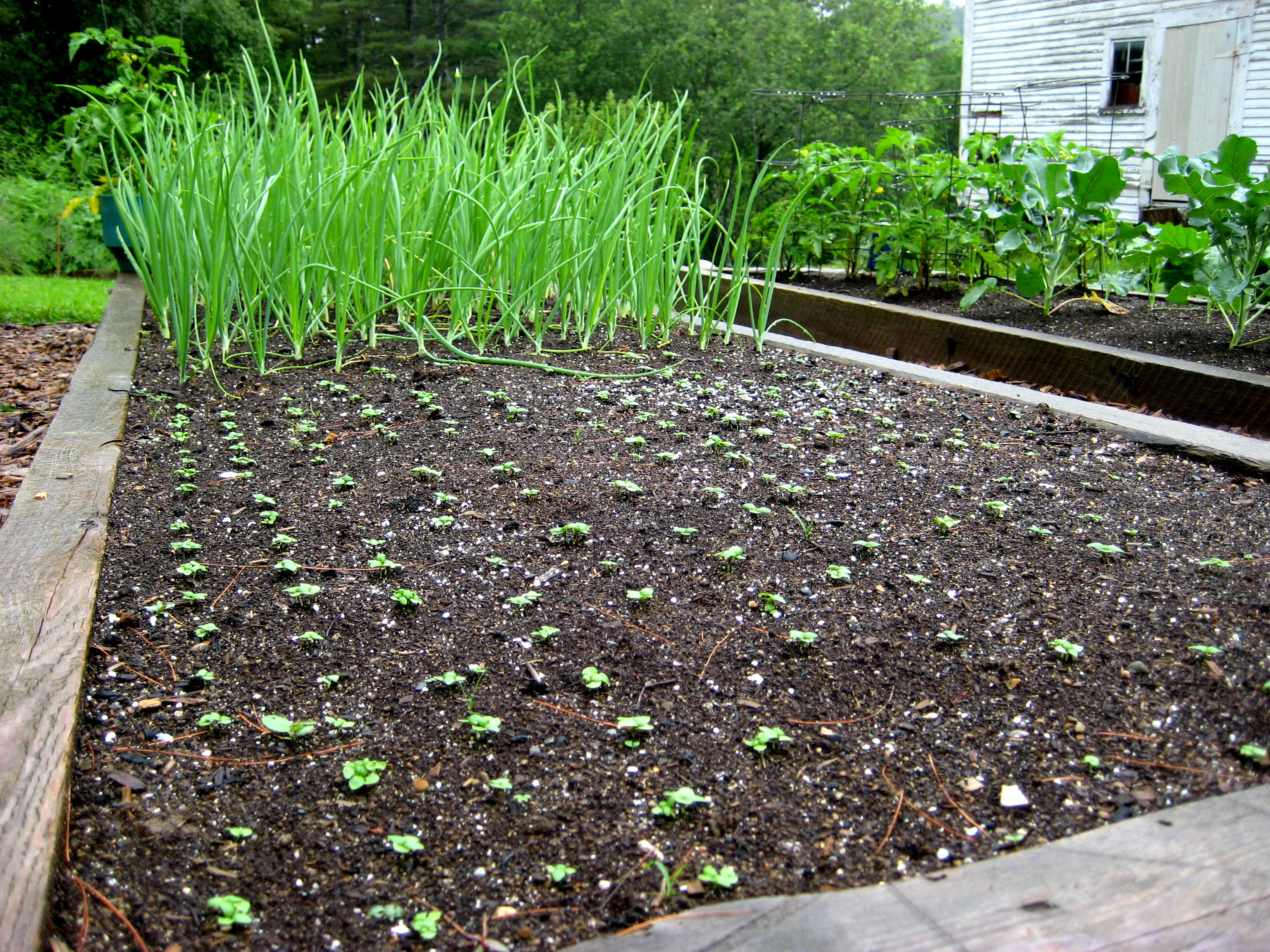
Tiny basil seedlings grow slowly in June in New Hampshire.
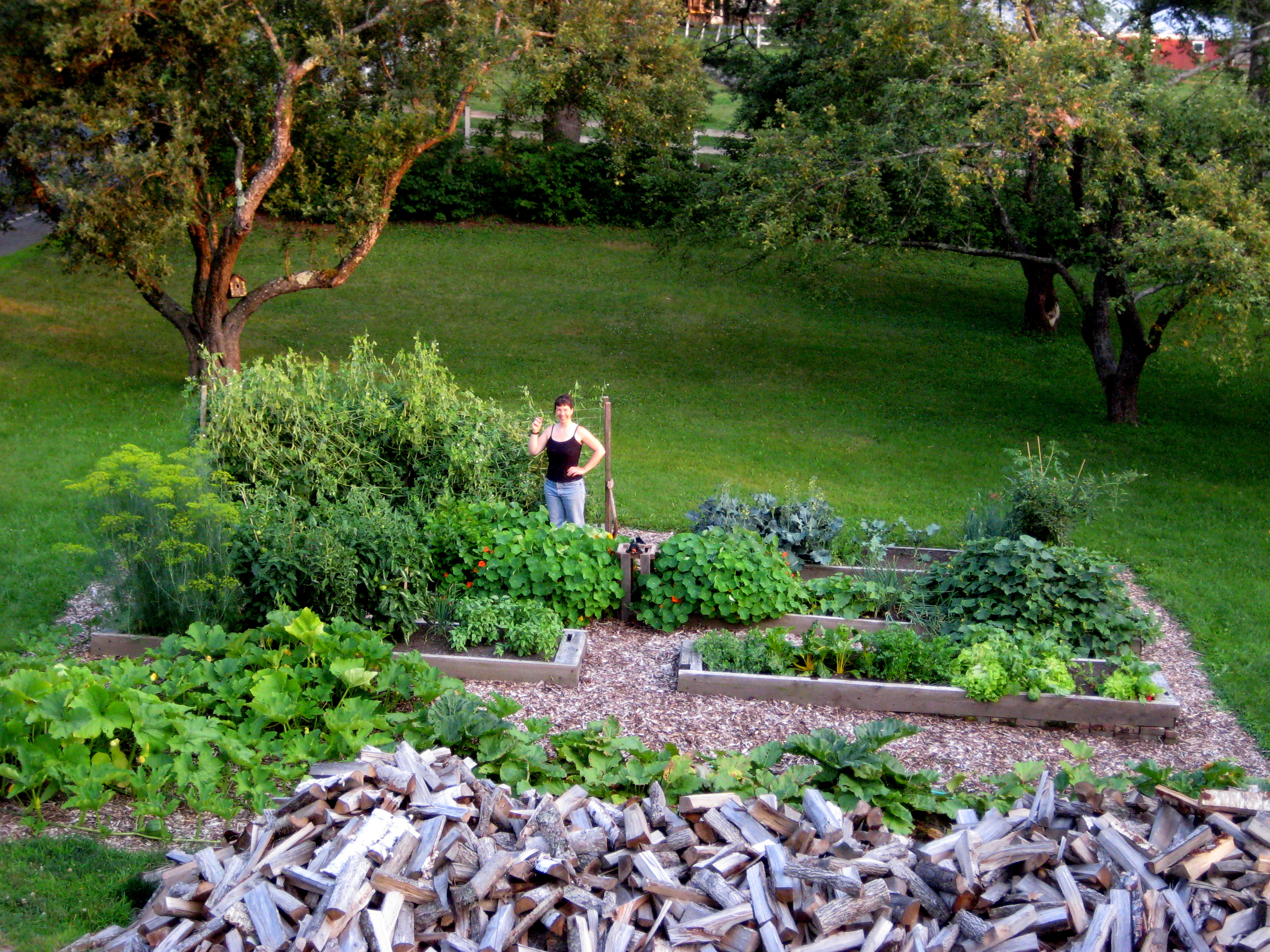
Because garden space is at a premium in our raised beds, I plant intensively, in grids.

Sometimes my basil seeds don't germinate well, but I always seem to have enough come August.
When the plants get big enough to crowd each other, I thin them, adding the leaves to fresh tomato & mozzarella sandwiches.

By August, my basil plants are growing strong.
“Genovese” is the most common basil. It’s great for pesto, but there are over 60 basil varieties, so why not try something different?

I usually grow Genovese basil, but have also tried a "Red Opal" variety with great results.

By mid-August, my basil plants are ready for harvest.
By the end of August, nighttime temperatures here in New Hampshire drop low enough that I start to get nervous. It doesn’t take much of a frost to kill off your lovely basil crop.

Harvested basil makes a heavenly bouquet!
We usually harvest the plants on a Friday night, after work. That’s the easy part. Next comes the slow task of separating basil leaves from stems. It’s nice to make a party of it!

Picking leaves from stems is slow work, but smells fabulous!
I love Ellen Ecker Ogden‘s pesto recipe because it calls for 1 cup Italian parsley for every 2 cups basil.
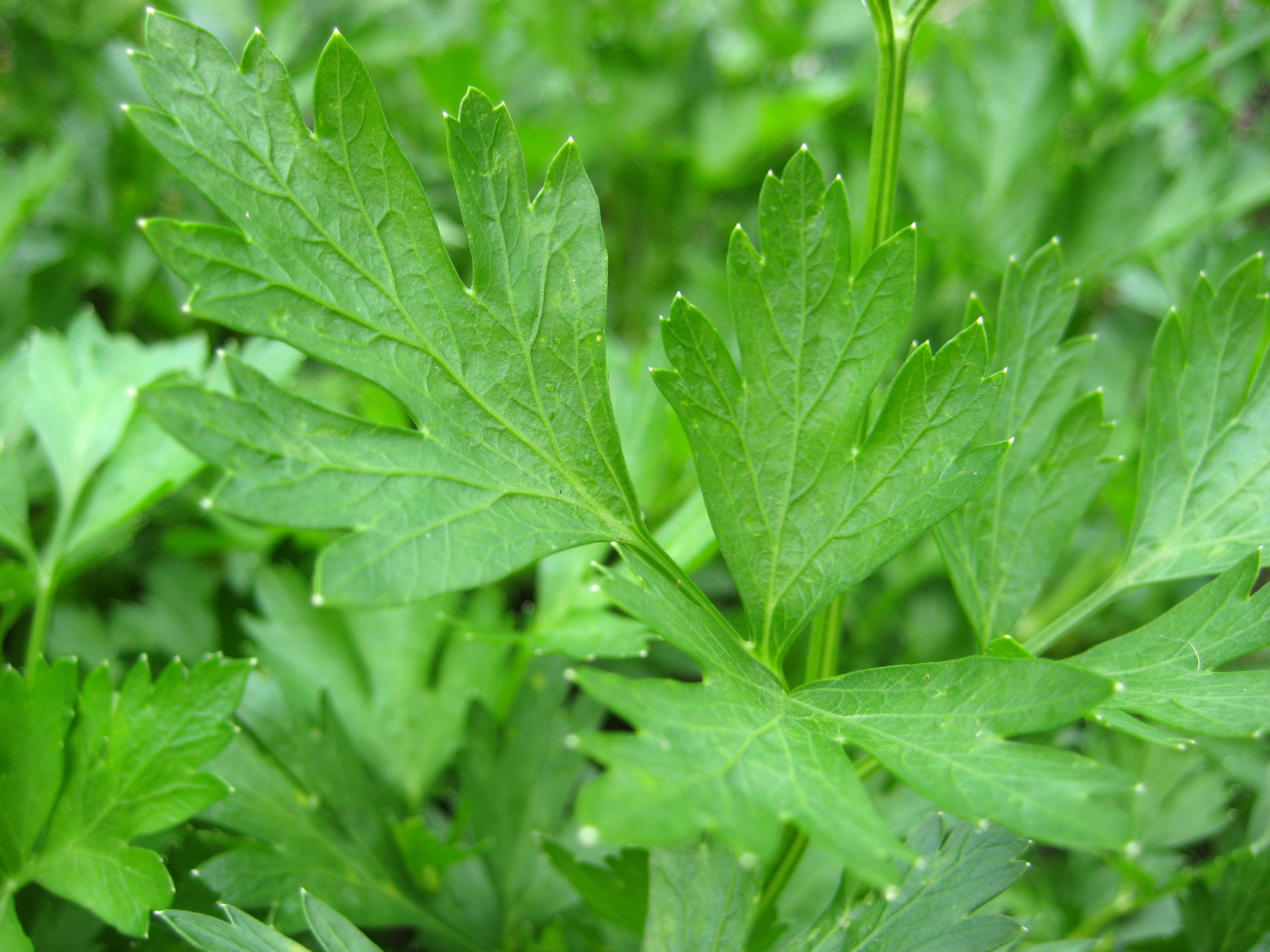
Flat leaf parsley is more flavorful than the curly type, but you'll still need to pick leaves from stems.
That helps stretch your basil harvest, and adds a nice fresh flavor. You could substitute other herbs, like oregano or chives, as well.

My pesto recipe comes from Ellen Ecker Ogden's excellent cookbook, From the Cook's Garden.
Toasted pine nuts are a traditional pesto ingredient, but you could substitute walnuts or even almonds and save yourself some money.
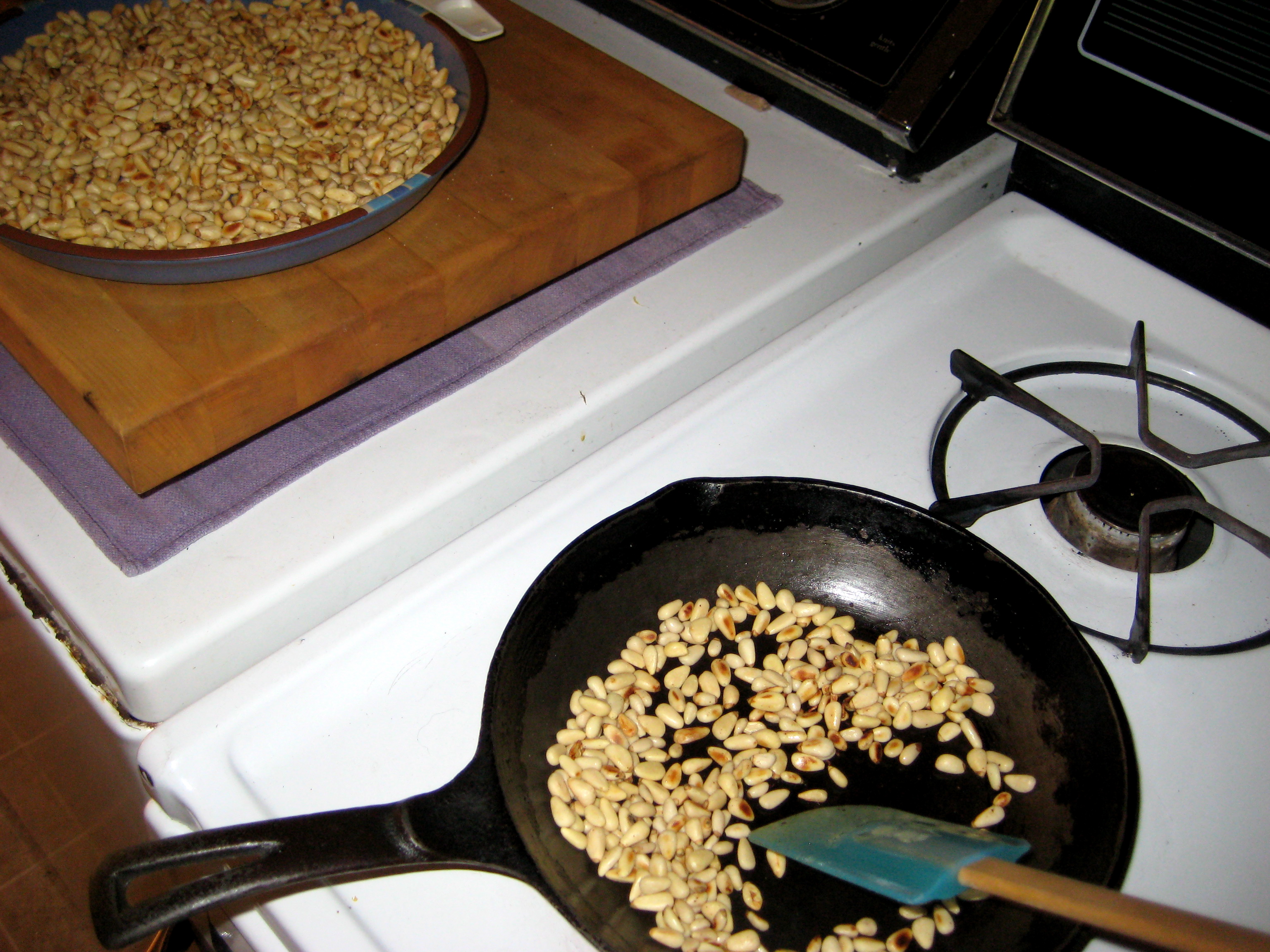
Toasting nuts in a skillet brings out their nutty, golden flavor. Keep stirring so they don't burn.
You’ll also need a bottle of lemon juice, some freshly grated parmesan cheese, several heads of fresh garlic and a good supply of quality olive oil.

Pesto ingredients assembled and ready.
Once you’ve got all your ingredients assembled, it’s time to get out the food processor!

Making pesto is messy but not complicated.
Ellen Ecker Ogden’s Basil Pesto
In a food processor, pulse to combine:
4 cloves garlic
2 cups basil
1 cup flat-leaf parsley
1/4 cup toasted nuts
1/4 cup lemon juice
With the blade running, slowly drizzle in:
3/4 cup extra virgin olive oil
Add & pulse to combine:
1/4 cup grated parmesan cheese
Season with salt & pepper to taste.
That’s it! Simple, right?
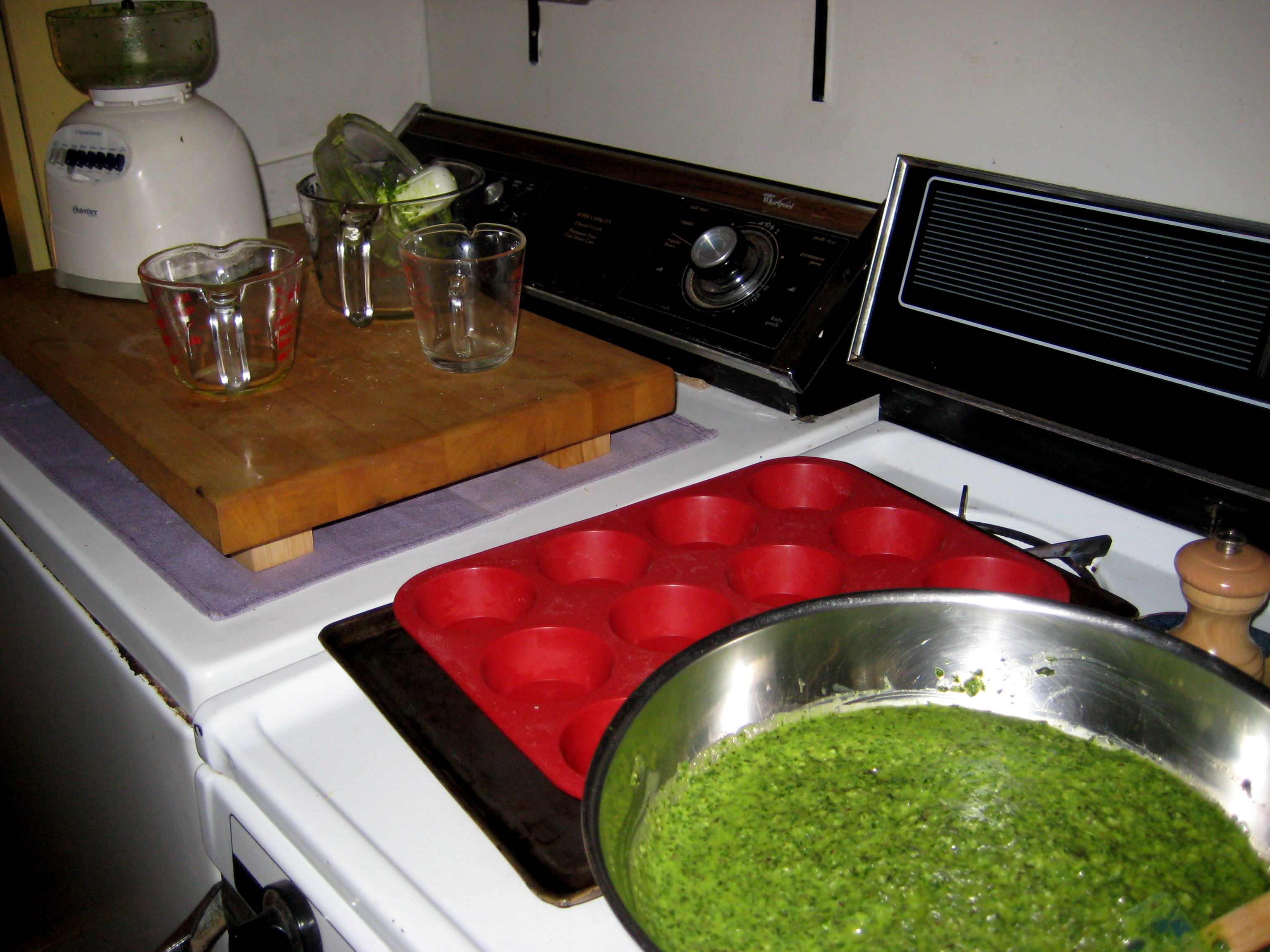
Pesto can be frozen in a silicone muffin tray for smaller servings, ready to be used all year long.
I make anywhere from 10-20 batches, mix it all together in a big bowl, then freeze it in muffin-sized portions (we call them “pesto pucks”) to use throughout the year.
One puck is enough for a pizza, 2 is nice for broccoli pasta, and 3 is perfect for a lasagna.
Garden-fresh pesto in the middle of winter is a real treat, and doesn’t have to break the bank. But you have to plan ahead… and spring is right around the corner!
What about you? Do you have a favorite garden treat or a pesto recipe of your own?












 Carrie Cahill Mulligan